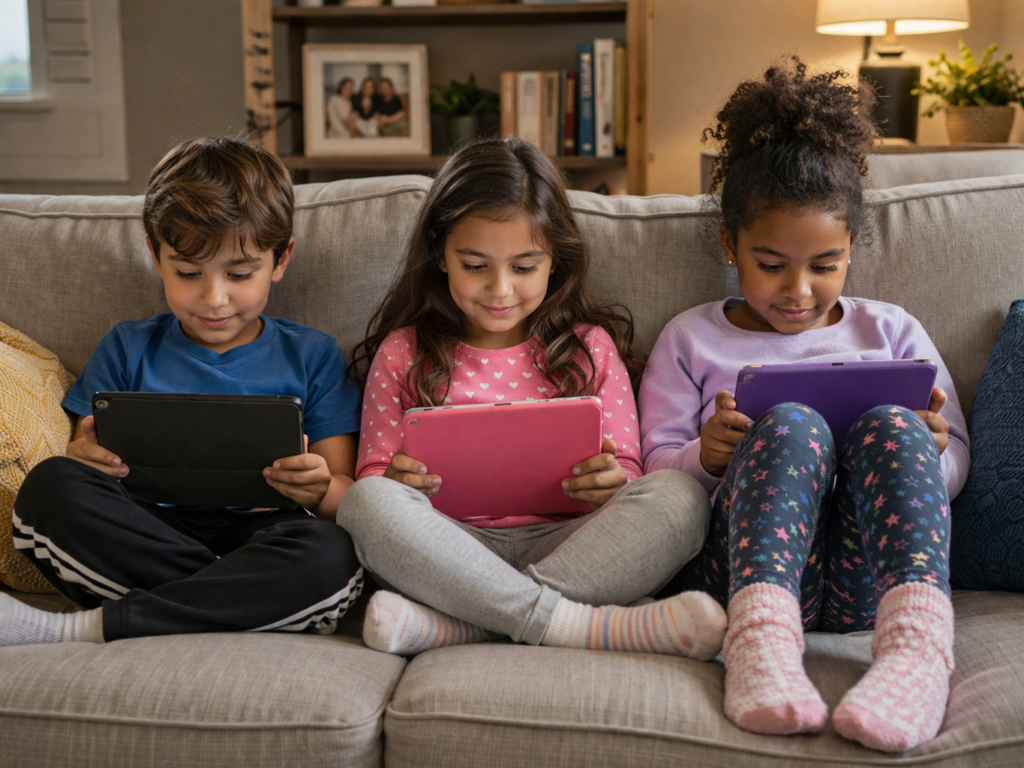
Screen time is one of the most talked about topics among parents and carers these days. Discussions at coffee mornings or playdates might lead to comparisons about how much friends’ children are allowed to watch each day and what content they’re viewing. We live in a digital age where screens are part and parcel of our daily lives, whether we like it or not. But more and more research points to the negative impact too much screen time can have on children’s development, behaviour and physical or mental health.
But the reality is that, with childcare costs at a record high and many parents juggling work with looking after their children, for many of us, screen time is a necessary part of our family life. And many of us use the TV to keep our children entertained while we take a work call, drink a cup of tea, cook dinner or simply have a rest. Parenting is stressful, exhausting and overwhelming.
However, statistics show that 98% of two year olds watch screens every day and 24% of parents of three to five‑year‑olds find it hard to control their child’s screen time. Screens can distract children from active play or social interaction and affect their concentration. This is why the government has issued guidance on how families can navigate the screen time battle and create habits which will support children’s wellbeing.
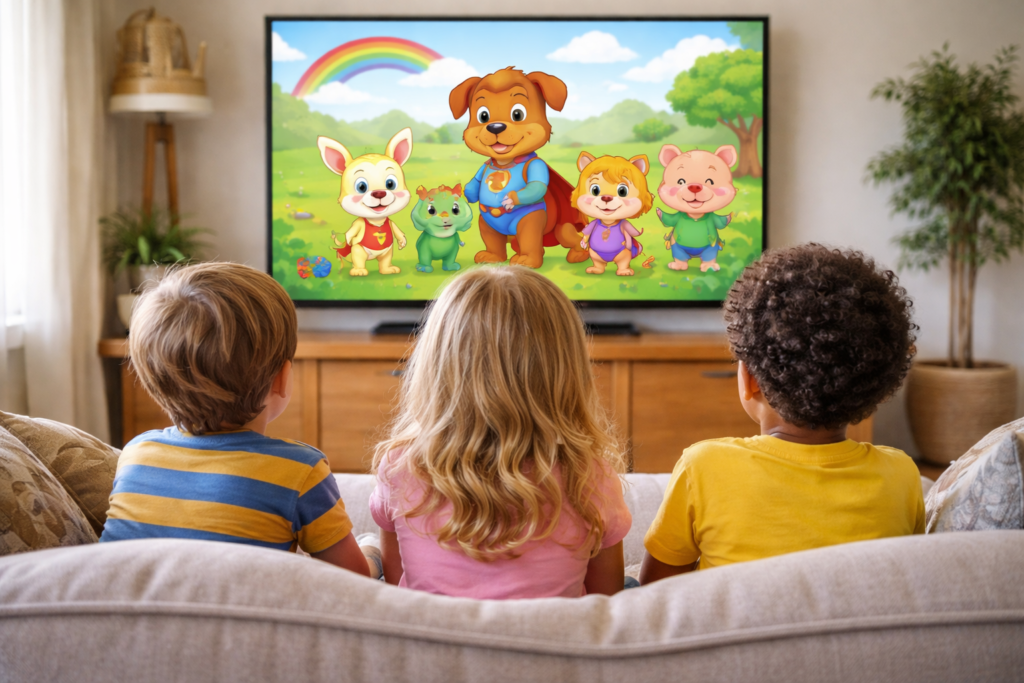
It’s the first time ministers and experts have stepped in to give parents advice. So what does the new guidance say?
The report recommends that screen time for under twos should be avoided altogether unless it “encourages bonding, interaction and conversation”. And ministers say two to five‑year‑olds should only watch a screen for one hour a day (less if possible) and that mealtimes and the hour before bed should be avoided.
The guidance has been developed by a panel led by the children’s commissioner, Rachel de Souza, and children’s health expert Professor Russell Viner. And as well as specifying the amount of time children should be allowed, suggestions have also been made about swaps we can make at home to give children the best possible start in life and to equip them with emotional, social and language skills.
Some of the suggestions might seem obvious to parents who are already doing these things but as screen time creeps up in so many households, it makes sense that the government wants to offer some tips. It feels especially important as teachers have reported seeing children start school aged four or five who are so unfamiliar with books that they try to tap or swipe them as they would with a phone or tablet.
Tips within the report include things like playing games at mealtimes and reading bedtime stories to avoid screen use at these times of day. And while it can be easy to plonk a child in front of a screen while you do chores or answer work emails, they say that sitting with them while they watch and talking about what’s on the screen is better for young children’s brain development and language skills. They also advise avoiding “fast-paced social media-style videos” and apps, social media or technology that use AI.
But how realistic is the guidance for those of us juggling young children with other responsibilities or for people with physical or mental health problems? Parenting is a 24-hour job so it’s natural to crave down time or a moment’s peace and quiet. Plus, without the help of a screen, it might feel impossible to do things like get dressed or put some washing on when you’re at home.
And the government telling us that we all need to ‘make screen time count’ might feel hypocritical to some parents whose children use screens at school and have to log on to online apps to do their homework, even in Reception. Celebrities like the actress Sophie Winkleman (Claudia’s sister) have voiced concerns about screens affecting young children’s interaction with their teachers and peers, and their ability to focus and problem-solve.
The key thing for all of us is to be aware of the negative impact, and, as with so much of parenting, it’s the adults who should lead by example. We’re all guilty of doom-scrolling when we’ve got a moment to ourselves, having phones at the dinner table or just generally using our devices more than we should. If we all make a concerted effort to be screen-free for longer each day and prioritise face-to-face interaction with our families then hopefully we can set our children up for happy and healthy childhoods.
And of course, screen time for toddlers and older children can be educational, inspiring and fun. There’s never been more choice when it comes to programmes to enjoy and watching a movie snuggled up on the sofa can be a really special way of bonding. Many of us will remember the children’s programmes we loved when we were young and will want to create these memories for our children too. We just need to make sure we balance it all with lots of non-digital fun and games too.
You can find more information on the Best Start in Life website